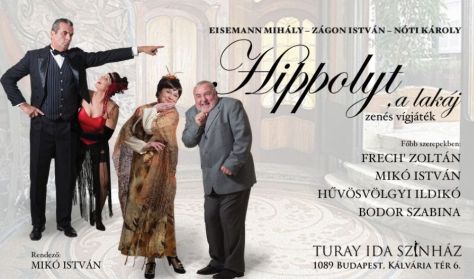
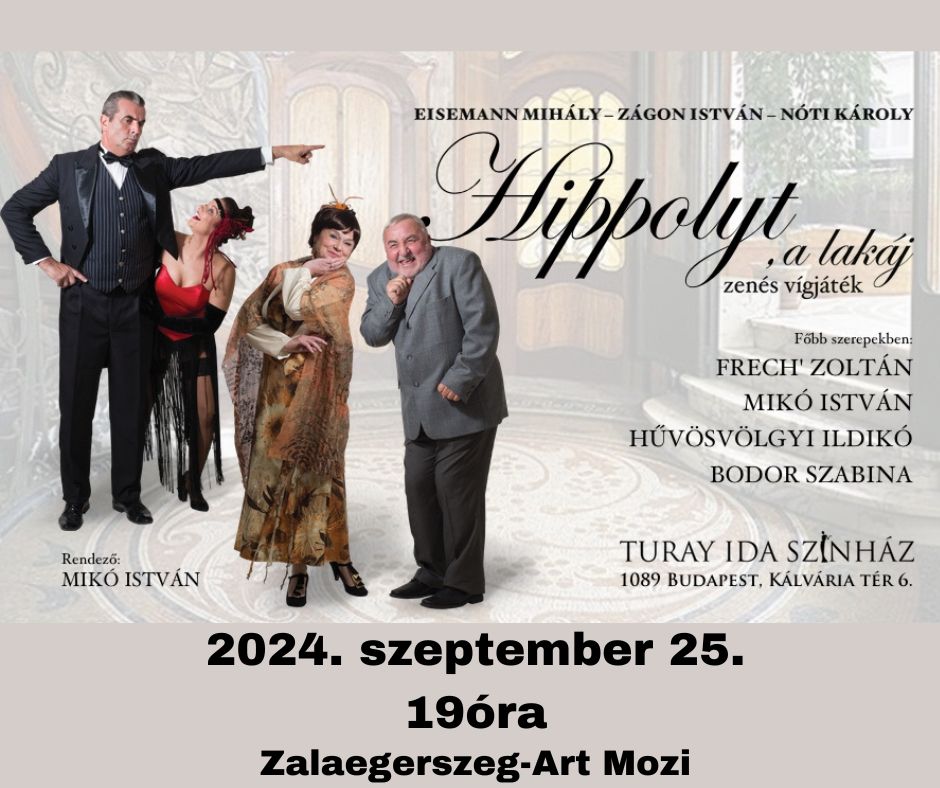
Hippolyt,a lakáj
Schneider Mátyás fuvarozó egyik napról a másikra sikeres lesz. Gazdagságát azonban megkeseríti, hogy felesége egy grófi lakájt szerződtet, mert nagypolgári életet akar élni. more
Schneider Mátyás fuvarozó egyik napról a másikra sikeres lesz. Gazdagságát azonban megkeseríti, hogy felesége egy grófi lakájt szerződtet, mert nagypolgári életet akar élni. more
Ön egy múltbeli eseményre keresett rá. Kérjük, válogasson aktuális kínálatunkból a Jegy.hu keresőjében!
Last event date: Wednesday, September 25 2024 7:00PM
Az arisztokrata családoknál szolgáló Hippolyt megjelenése az újgazdag Schneider-házban számos nevettető, mulatságos helyzetre ad alkalmat. A pedáns komornyik mellett további bonyodalmakat okoz Nagy András mérnök, aki szerelmes Terkába, ezért inkognitóban dolgozik a cégnél, hogy a főnök lánya közelében lehessen.
Schneiderné azonban már kinézett Terkának egy “jó partit”: Makátshoz, a jó családból származó udvarlóhoz akarja adni. A dolgok persze – ahogy egy jó vígjátékhoz illik – a végén szépen elrendeződnek, s otthon a nézők nagyrésze nevetve idézi fel a ma már klasszikus mondatot: „holnaptól a hagymát is hagymával eszem”.
Two masterpieces of late 19th-century French sacred music make up the programme of this concert-hall celebration: Gabriel Fauré’s exquisitely beautiful Requiem and the Clovis Mass by the elderly Charles Gounod. Between the movements of the latter work, the audience will also become acquainted with four further gems from the Gallican tradition of church music, with one composition each by Alexandre Guilmant, Louis Aubert, Camille Saint-Saëns and Théodore Dubois.
The release of the volume A bilincs a szabadság legyen (‘Let the Shackles Be the Freedom’), a collection of the correspondence between Miklós Mészöly and Alaine Polcz, generated a significant level of interest in the writers’ private lives and literary work that, it is no exaggeration to say, continues to this day. Apart from the strong emotional bonds shared by several literary couples we could mention, it is perhaps the letters of these two authors that reveals the most thought-provoking ideas.
Das Rheingold is the introduction to the storyline, depicting the central conflict. Starting from a primeval state of peace, the opera shows how the original sin was committed, triggering a chain of events that eventually lead to complete annihilation.
For the fourteenth time, the Müpa is presenting a concert that brings the spotlight down on the myriad possibilities of…
Műsor: Liszt - II. magyar rapszódia, S. 359/4 Liszt - I. (Esz-dúr) zongoraverseny, S. 124 szünet Bartók - A kékszakállú…
Program: Mozart: The Magic Flute, K. 620 – excerpts
item(s) in basket
total:
Time limit has expired. Please, put item(s) in to basket again.